Microsoft wants to store your data in glass for 10,000 years
Hard drives fail. SSDs wear out. Even massive data centers constantly replace aging storage. Microsoft believes the future of long-term data preservation might look very different, and surprisingly simple: glass.
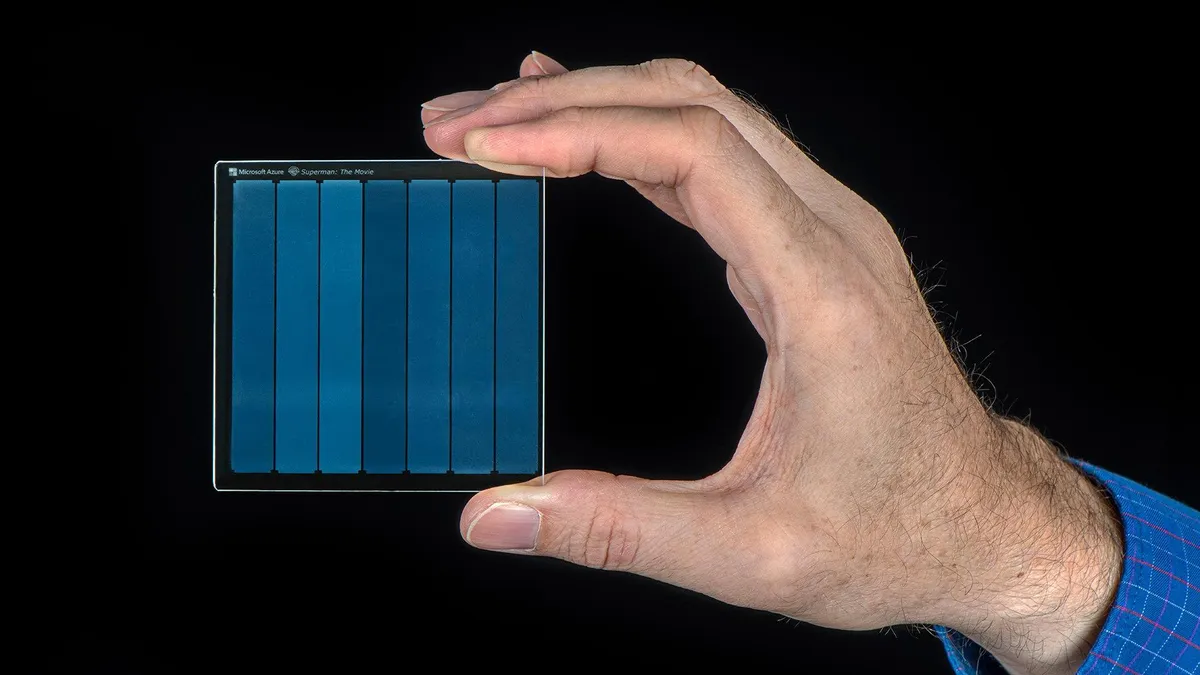
IMG Source: Microsoft.com
Back in 2019, Microsoft Research introduced Project Silica, an ambitious effort to store digital data inside glass plates. Now, after years of development, the team says it has made a major leap forward. Instead of relying on expensive fused silica, researchers discovered that common borosilicate glass, the same durable material used in kitchen cookware, can reliably store data for extreme periods of time.
That shift matters. Borosilicate is cheaper, widely available, and far easier to scale commercially. According to findings published in Nature, Microsoft can now write hundreds of data layers into a glass sheet just 2mm thick. In one demonstration, the team stored 4.8TB of data across 301 layers inside a small glass slab.
The speed isn’t impressive compared to modern SSDs, as writing happens at just a few megabytes per second. But speed isn’t the point. Longevity is. Using accelerated aging tests, researchers estimate the data could remain intact for up to 10,000 years.
The hardware has also improved. What once required bulky machinery and multiple cameras has been simplified dramatically. Reading the stored data now requires only a single camera system, and the writing process has become faster and easier to calibrate.
Traditional storage methods typically last a decade or two before needing replacement. Glass, by contrast, doesn’t require constant power, cooling, or maintenance once written. That could make it ideal for archives, governments, and institutions preserving humanity’s most important data.
Project Silica may not replace your SSD anytime soon, but for century-scale storage, it could change everything.